
About CDP
Since 2010, the Sabancı University Corporate Governance Forum of Türkiye (SU CGFT) has been CDP’s partner in Türkiye. CDP is a London-based international non-profit organization. CDP provides the world’s only global environmental and nature disclosure system for companies and cities. Founded in London in 2000, CDP has played a pioneering role in promoting transparent environmental disclosure by companies through the power of capital markets and corporate supply chains.
CDP enables companies and cities to disclose how they use natural resources and natural capital, how they affect the regeneration of finite resources, and how they manage related risks, making this information available to the public, investors and buyers. Through this work, CDP aims to transform the way businesses operate in order to mitigate the impacts of climate change and protect natural resources. CDP works to uncover the data needed to drive Earth-positive decisions and to create a world in which people, planet and profit are balanced in harmony.
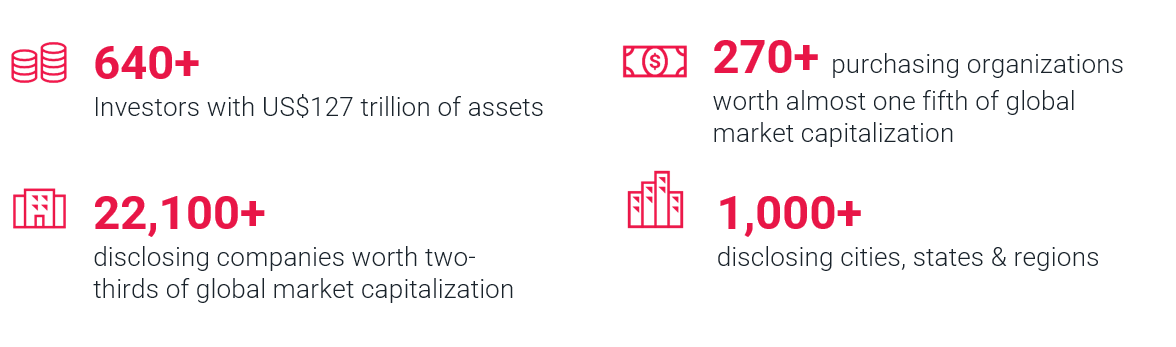
Today, CDP holds the world’s largest and most comprehensive collection of environmental data. The data collected by CDP guides investors, companies and cities in making Earth-positive decisions. As of 2026, more than 640 investors representing US$127 trillion in assets and over 270 major purchasers worth almost one fifth of global market capitalization use CDP’s disclosure system and data to manage risks, identify opportunities and make smarter, more sustainable decisions. In 2025, more than 22,100 companies and over 1,000 cities, states and regions disclosed environmental data through CDP. CDP makes these data comparable and seeks to advance international disclosure standards in its field. Collected on behalf of investors and major purchasers, these data are used in business, investment and policymaking processes through CDP’s analyses and reports. To support the transition to a sustainable, resilient and decarbonized economy, CDP scores are widely used around the world in investment and procurement decision-making.
Sabancı University Corporate Governance Forum has been CDP’s partner in Türkiye since 2010. Thanks to this platform, companies in Türkiye responding to CDP have the opportunity to share their environmental and nature-related policies with the public, capital market actors, and international buyers. CDP Türkiye’s mission includes facilitating dialogue among companies, supporting policies to mitigate the impacts of climate change and nature degradation, elevating environmental risk management to the level of corporate governance, educating and informing responding companies about potential benefits, and transferring and implementing global developments in this field within Türkiye.
The CDP Türkiye team supports policy-making processes by working with public institutions, capital market authorities, relevant ministries, and other decision-making bodies. The team regularly participates in UN Climate Change Conferences as part of the Turkish delegation. It has been involved in awareness-raising, capacity-building, and training activities related to the implementation of carbon pricing mechanisms led by the Ministry of Environment, Urbanization, and Climate Change. The team has also contributed to the development of an Emissions Trading System (ETS) and the formulation of a Climate Law.
CDP Türkiye works in close cooperation with academia, the private sector, and civil society to ensure that developments in environmental and sustainability fields are transferred to and implemented in Türkiye. It is one of the founding members of the Borsa İstanbul Sustainability Platform. The environmental data used in the Borsa İstanbul Sustainability Index, which is currently implemented in Türkiye, is collected based on CDP data. Likewise, the Garanti BBVA Climate Index and Climate Fund are developed based on CDP data.
Additionally, CDP Türkiye has signed a cooperation protocol with the Public Oversight, Accounting and Auditing Standards Authority (KGK), which is the responsible institution for mandatory reporting in Türkiye, and carries out activities to support the transition to mandatory disclosure.
CDP’s Role in the COP31 Process
As part of the preparations for COP31, CDP contributes to strengthening multi-stakeholder climate dialogue through its activities at both national and international levels. In this context, meetings held with public institutions, particularly the Directorate of Climate Change and the Public Oversight Authority (KGK), have focused on recent developments in climate policy, sustainability reporting, climate-related financial disclosures, and opportunities for collaboration to strengthen institutional capacity in the lead-up to COP31.
CDP Türkiye also plays an active role in various platforms that bring together representatives from public institutions, the private sector, academia, international organizations, and civil society. At events such as the roundtable titled "Towards COP31: The Role of the Private Sector in the Climate Action Agenda", organized in collaboration with UN Global Compact Türkiye, the United Nations in Türkiye, and the Zero Waste Foundation, as well as the ESG & COP31 Forum, participants exchanged views and experiences on topics including the transition to a low-carbon economy, climate finance, ESG governance, sustainability reporting, and the role of the private sector in climate action.
CDP also actively contributes to the Marrakech Partnership for Global Climate Action processes carried out under the UNFCCC. The Subsidiary Bodies (SB) sessions held in Bonn ahead of COP serve as an important platform for shaping the multi-stakeholder climate action agenda alongside the formal negotiation process. In this context, discussions involving the COP30 and COP31 High-Level Climate Champions, UNFCCC representatives, and international stakeholders have addressed issues such as zero waste, circular economy, climate-resilient cities, and data-driven climate governance. These efforts aim to support the strengthening of implementation-focused climate action and the development of multi-stakeholder partnerships in the lead-up to COP31.
CDP Türkiye also contributed to the global dialogue surrounding COP31 through its participation in high-level meetings, forums and side events held during London Climate Action Week (LCAW). You can access our bulletin here.
At a time when the COP31 Presidency's Action Agenda is shifting the global focus from commitments to implementation, CDP provides an important reference framework through its global environmental disclosure system, enabling companies to measure, manage, and track their environmental performance. Assessments prepared by CDP Türkiye demonstrate a strong alignment between the COP31 priorities and CDP's disclosure frameworks on climate change, water security, forests, and biodiversity, thereby supporting companies in assessing their readiness and capacity for implementation.
CDP Partnerships and Initiatives
CDP plays an influential role in both the business world and policy-making processes—not only through the programs it implements globally, but also by leading impactful campaigns and environmental movements.
CDP collaborates with many of the world’s leading environmental organizations, including the Global Reporting Initiative (GRI), UN environmental agencies and projects, UN Principles for Responsible Investment (UNPRI), UN Environment Programme (UNEP), Caring for Climate, World Wide Fund for Nature (WWF), World Business Council for Sustainable Development (WBCSD), the International Integrated Reporting Council (IIRC), and the World Resources Institute (WRI). Through these collaborations, CDP supports and guides initiatives and organizations globally as a leading authority on environmental matters. CDP is also a founding member of the Science Based Targets initiative (SBTi),Science Based Targets Network (SBTN), the We Mean Business Coalition, The Investor Agenda, and the Net Zero Asset Managers initiative.
Ahead of the Paris Agreement, CDP was one of the pioneers of the “Portfolio Decarbonisation” movement, initiated by international investors seeking to remove high-emission companies and sectors from their portfolios. CDP played a leading role in shaping the Paris Agreement as part of the globally influential We Mean Business campaign.
As part of its collaboration with GRI, CDP aligned its environmental questions directly with GRI indicators to reduce the reporting burden on companies. In a similar effort, CDP’s disclosures were brought into full alignment with the Task Force on Climate-related Financial Disclosures (TCFD) recommendations in 2018.
In addition to being the world’s largest corporate environmental disclosure platform, CDP has long been working to collect the most comprehensive data on nature-related impacts. In September 2023, CDP announced its collaboration with the Taskforce on Nature-related Financial Disclosures (TNFD), marking the beginning of its commitment to providing standardized, comparable data and aligning fragmented voluntary frameworks and standards into a unified system.
CDP is also one of the founding partners of the Science-Based Targets for Nature (SBTN). This initiative, born from a coalition of nonprofit organizations, aims to guide companies and cities in setting science-based targets specifically for nature. These efforts help companies and cities create clear roadmaps to address their impacts on nature across their value chains. SBTN’s work builds on the foundation laid by SBTi, of which CDP is a co-founder, and continues to develop methodologies for setting science-based targets for land, freshwater, oceans, and biodiversity.
CDP collaborates with the Accountability Framework initiative (AFi) to support the implementation of responsible agriculture and forestry supply chain commitments. Through this collaboration, CDP’s reporting framework is aligned with AFi’s core principles, enabling organizations to report on commitments to eliminate deforestation and ecosystem conversion from their supply chains in line with common definitions and expectations.
CDP also collaborates with the Ellen MacArthur Foundation (EMF) to advance the transition to a circular economy. The New Plastics Economy Global Commitment, launched by EMF and the United Nations Environment Programme (UNEP), brings together businesses, governments and other stakeholders around a shared vision in which plastics never become waste or pollution. CDP works with EMF to align plastics-related datapoints in its corporate questionnaire, supporting organizations in reporting on their commitments through CDP.
When examining CDP’s role within the global reporting ecosystem, it becomes clear that CDP has significantly contributed to the adoption and institutionalization of emerging frameworks such as science-based targets, net-zero targets, and TCFD-aligned reporting. CDP also plays a central role in integrating global disclosure initiatives and frameworks and tracking performance over time. For instance, as a key partner of SBTi, CDP presents specific questions on science-based targets to thousands of reporting companies annually, offering them the opportunity to report these targets in a standardized format through CDP.
A New Era Began in CDP Reporting System
When we look at the future of sustainability reporting, one of the most significant emerging trends is the shift toward nature-based disclosure. From CDP’s perspective, this will be a central focus in the coming period—because it is impossible to tackle the climate crisis without simultaneously addressing the nature crisis.
In this context, CDP implemented comprehensive changes to its disclosure system in 2024 to help companies advance more effectively on their sustainability journeys. These changes not only enable companies to provide more impactful environmental data, but also facilitate access to comparable, decision-useful data that meets the needs of global capital markets and policymakers, supporting more equitable decision-making processes.

The New CDP Platform
In 2024, CDP launched a new technology platform and user interface designed to significantly improve the disclosure process and accelerate climate action. Through this upgraded platform—designed to enhance user experience—companies can report more easily, while the platform also aims to increase the comparability and consistency of CDP data.
Consolidated Questionnaires
In 2024, CDP consolidated the Climate Change, Water Security, and Forests questionnaires into a single integrated corporate questionnaire. This simplifies the reporting process and ensures the right questions are directed to the right companies without duplication.
What Does Integration Mean?
Theme-specific questions still exist within the new CDP Corporate Questionnaire, but reporting companies now see all relevant questions through a single unified interface and need to respond only once. While integrated questions are visible across all modules (except Environmental Performance), the Environmental Performance section still contains theme-specific questions tailored to the environmental areas the company is reporting on. This applies to all sectors except financial services.
Value Chain Mapping
Reporting companies are now required to provide information about organizations within their value chains.
Enhanced Risk Assessment
CDP has moved beyond risk assessments focusing only on business-related risks and opportunities to include the evaluation of environmental impacts and dependencies.
All Companies Report on Biodiversity and Plastics
All responding companies are now required to report on biodiversity and plastics, enhancing market access to critical data on these two issues. Sectors most affected by plastic pollution receive a more detailed question set.
New Corporate Questionnaire for SMEs
CDP introduced a new, simplified SME questionnaire, aligned with the core corporate questionnaire but requiring less data and structured for ease of use. The aim is to help SMEs understand where to focus, how to build capacity, and how to take action. With fewer questions, a simplified format, and improved guidance, the SME questionnaire is better suited to the resource constraints of smaller businesses. It focuses on climate change only and does not include sector-specific questions.
Financial Services Questionnaire
A new integrated module specific to the financial services sector was introduced, requiring portfolio-level reporting and including questions tailored to the sector.
Why did CDP take this step and align its questions with other standards through an integrated approach?
The climate crisis cannot be addressed successfully without simultaneously tackling the nature crisis. Carbon emissions and climate change are only part of the challenge. Climate and nature must be addressed together in a simultaneous and just manner. This includes protecting and restoring ecosystems, transitioning to more sustainable agricultural and forestry practices, and embracing a circular economy. Although interconnected, nature disclosure currently relies on a range of separate frameworks, standards and regulations. In this context, CDP continues its alignment efforts to collect the most comprehensive corporate environmental data on nature. Adopted in 2024, CDP’s integrated disclosure approach helps advance the holistic environmental action that the world urgently needs by addressing climate and nature as interconnected issues.
One of the most significant milestones in the transition towards nature-related disclosure was the establishment of the Taskforce on Nature-related Financial Disclosures (TNFD), which can be considered an extension of the Task Force on Climate-related Financial Disclosures (TCFD). TCFD has been one of the most influential frameworks guiding companies on how to address climate-related issues within mainstream financial filings. TNFD has now developed a set of recommendations and guidance to help companies disclose their nature-related dependencies, impacts, risks and opportunities, and take action accordingly. These recommendations and guidance will enable businesses and financial institutions to integrate nature into decision-making processes and ultimately help redirect global financial flows towards companies that do not harm nature or society.
Another important initiative in this area is the Science Based Targets Network (SBTN), which emerged through the collaboration of non-profit organisations. As with the Science Based Targets initiative (SBTi), CDP aims, through SBTN, to guide companies and cities in setting science-based targets specifically for nature.
CDP is expanding its work to cover all planetary boundaries. This means adapting its disclosure framework to encompass all climate- and nature-related disclosures. Through its Forests and Water Security questionnaires, CDP has already addressed many of these issues, and with the incorporation of TCFD in 2018, the framework had already become partially aligned with TNFD. Now, with the integrated questionnaire and the eventual incorporation of TNFD- and SBTN-specific content, CDP has initiated the process of providing a disclosure platform through which companies and financial institutions can meet the requirements of nature-related disclosure recommendations.
CDP’s Alignment with Reporting Frameworks and Standards
CDP plays a critical role in supporting companies on their sustainability journeys amid rapidly evolving business conditions. For many years, CDP has taken on the role of ensuring consistency among corporate reporting frameworks and standards in order to reduce the reporting burden on companies.
CDP’s globally aligned Corporate Questionnaire, designed to be compatible with the world’s most important frameworks and standards, aims to significantly ease companies’ reporting obligations. By working in harmony with international reporting frameworks and standards, CDP helps companies accurately report their sustainability performance and facilitates access to the data needed by investors and other stakeholders.
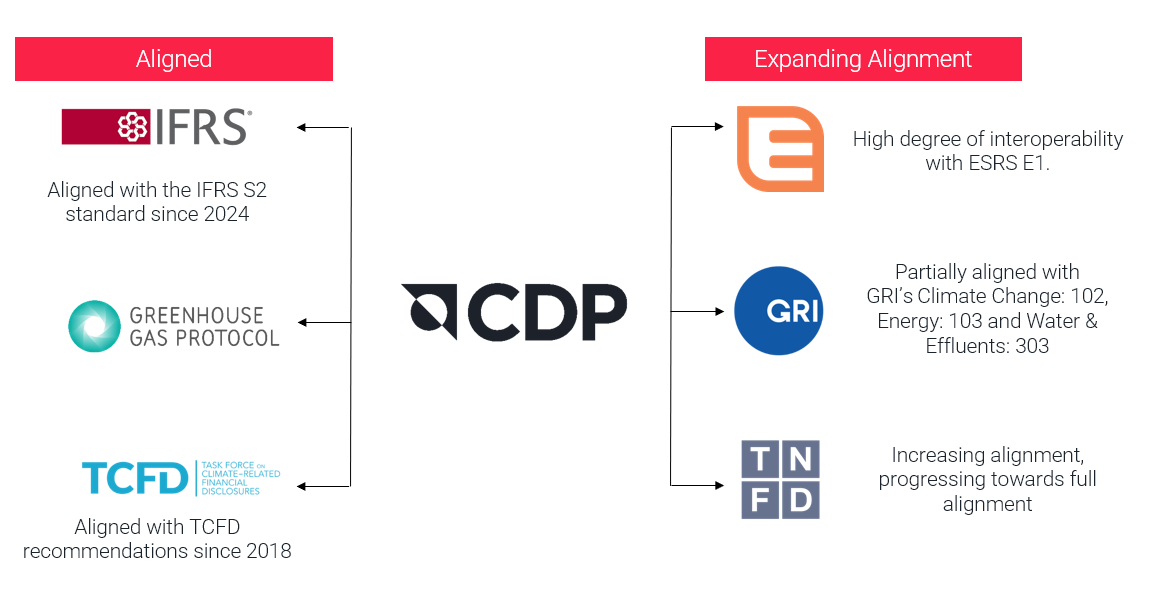
International Financial Reporting Standards (IFRS) S2 Climate-related Disclosures
CDP 2026 Alignment Status: Fully Aligned with IFRS S2
CDP is the International Sustainability Standards Board's (ISSB) key global climate disclosure partner, with over 22,100 companies disclosing in 2025. The ISSB’s climate standard is the foundational baseline for CDP’s climate disclosure. Since 2024, CDP questionnaire has been aligned with IFRS S2 Climate-related Disclosures (IFRS S2). Together with the disclosed dataset, our questionnaire provides an effective tool to support companies on their path to ISSB disclosure.
Jurisdictions that account for nearly 60% of global Gross Domestic Product (GDP) are taking steps to introduce ISSB Standards into their legal or regulatory frameworks. Companies already disclosing environmental data through CDP – representing two-thirds of global market capitalization – are on the path towards meeting new requirements in jurisdictions adopting the ISSB Standards.
Download mapping - IFRS S2 to CDP Full Corporate Questionnaire 2026
European Sustainability Reporting Standards (ESRS)
CDP 2026 Alignment Status: High degree of Interoperability with ESRS E1
European Sustainability Reporting Standards (ESRS)
The ESRS are legally binding standards under the EU Corporate Sustainability Reporting Directive (CSRD) for corporate reporting on sustainability-related information, and apply to both EU-based and non-EU companies operating in the region.
CDP is substantially aligned with the pre-Omnibus ESRS climate standard (ESRS E1). We have worked closely with EFRAG since 2023 and are currently developing an updated mapping between CDP's 2026 questionnaire and the pre-Omnibus ESRS E1. Once the revised (post-Omnibus) ESRS are formally adopted, CDP will collaborate with EFRAG to publish correspondence mappings of the revised ESRS 2 and E1-E5 against the 2026 CDP questionnaire.
Amid evolving regulatory requirements, CDP remains a robust tool to support preparation for ESRS climate-related disclosures and to help leverage this data to unlock real business value.
Download correspondence mapping - pre-Omnibus ESRS E1 to 2026 CDP 2026 CDP questionnaire
Task Force on Climate-related Financial Disclosures (TCFD)
CDP 2026 Alignment Status: Aligned with the TCFD Recommendations
Established by the Financial Stability Board, the TCFD has moved the climate disclosure agenda forward by emphasizing the link between climate-related risk and financial stability. The Task Force has recommended that both organizations and capital markets actors disclose information on climate change.
CDP’s climate change datapoints have been aligned with the TCFD recommendations since 2018, prompting organizations to disclose data on how climate-related issues are addressed in their governance, strategy, risk management, and metrics and targets.
By translating the TCFD recommendations and pillars into actual disclosure questions and a standardized annual format, CDP provides investors and disclosers with a unique platform where the TCFD Framework can be brought into real-world practice.
The TCFD framework remains relevant across the global economy; however the Task Force itself was disbanded 2024, and its responsibilities folded into those of the IFRS Foundation.
Our technical note on TCFD recommendations contains the mapping of CDP questions to these recommendations.
Taskforce on Nature-related Financial Disclosures (TNFD) recommendations
CDP 2026 Alignment Status: Increasing Alignment, Progressing Towards Full Alignment
CDP has been a key knowledge and delivery partner of the TNFD since the inception of the Taskforce, and continues to collaborate with the TNFD on a range of knowledge and capability building initiatives to support market participants globally.
CDP’s questionnaire is partially aligned with the TNFD disclosure recommendations, providing the platform for companies to disclose their TNFD-aligned data directly to stakeholders and the market.
Granular and high-level mapping documents are available to enable disclosing companies and data users to understand CDP’s alignment with the TNFD recommendations, core global and sector metrics.
Download correspondence mapping (granular) - CDP to TNFD
Global Reporting Initiative (GRI) standards
CDP 2026 Alignment Status: Partially Aligned
GRI provides standards, tools and training that empower organizations of all sizes to create sustainable, long-term value and unlock positive change in the world. CDP and GRI are working together to streamline disclosure, boost access to comparable data and ensure that environmental reporting reflects the highest ambition.
Companies can report GRI-aligned data to stakeholders and the wider global market through CDP’s questionnaire, which is partially aligned with GRI’s Climate Change: 102, Energy: 103, Water & Effluents: 303 and Biodiversity: 101 Standards.
CDP and GRI have also jointly produced a mapping of the GRI 102 and 103 standards to CDP’s full corporate questionnaire.
Download mapping - GRI 102 and 103 to CDP Full Corporate Questionnaire 2026
Greenhouse Gas (GHG) Protocol
CDP 2026 Alignment Status: Aligned with GHG Protocol Standards
CDP's reporting requirements on climate impacts, metrics and targets are aligned with the reporting requirements in the GHG Protocol Corporate Standard, Scope 2 Guidance, Corporate Value Chain (Scope 3) Standard and Agriculture Guidance. CDP’s question-level guidance also encourages organizations to adopt the GHG Protocol in determining their organizational boundary, as well as in reporting their emissions inventory and other key emissions metrics.
With the GHG Protocol’s Agriculture Guidance being superseded by the new GHG Protocol Land Sector & Removals Standard (LSRS), CDP has updated its questionnaire in 2026 to prepare organizations to collect the data that will be requested in future cycles. CDP continues to collaborate with the GHG Protocol, and it is our intention to align our questionnaire with the LSRS in 2027.
Download CDP’s technical notes and guidance on GHG reporting:
- Accounting of Scope 2 Emissions
- Relevance of Scope 3 Categories by Sector
- Guidance Methodology for Estimation of Scope 3 Category 11 Emissions for Coal Mining Companies
- Guidance Methodology for Estimation of Scope 3 Category 11 Emissions for Oil and Gas Companies
Accountability Framework initiative (AFi)
CDP is part of the AFi’s collaborative effort to help companies fulfill commitments for responsible agriculture and forestry supply chains. The Accountability Framework provides a set of principles and guidelines designed to establish common definitions, norms, and best practices to help companies set, implement, monitor, and report on ethical supply chain commitments.
CDP has been working in collaboration with the AFi to retain alignment, so that organizations disclosing through CDP will also be reporting on the core principles set out in the initiative. Alignment with the AFi ensures that consistent, consensus-based expectations are set for organizations to remove deforestation and conversion from their supply chains, and to ensure alignment in disclosure and reporting metrics.
For further support with applying the Accountability Framework’s core principles, operational guidance and definitions, visit the AFi e-learning platform.
Ellen MacArthur Foundation (EMF) Global Commitment
Launched by the Ellen MacArthur Foundation and the UN Environment Programme, the New Plastics Economy Global Commitment unites businesses, governments, and other organizations from around the world behind a common vision of a circular economy for plastics, in which it never becomes waste or pollution. In November 2025, the updated 2030 Global Commitment was published, which builds on this progress. This has led to businesses representing 20% of the plastic packaging market re-committed to the next phase, to set 2030 targets and publicly report on their progress.
The EMF focuses on the production, commercialization and usage of plastic packaging, which CDP largely captures in the “Environmental performance – Plastics” module of our questionnaire. CDP is partnering with EMF to develop plastics datapoints that align with future developments of the EMF Global Commitment, aiming to allow organizations to report against the Global Commitment by disclosing through CDP's full corporate questionnaire in the near future.
Türkiye’s Alignment with Global Reporting Standards
CDP supports companies in preparing for evolving regulatory requirements by ensuring a high level of interoperability and alignment with the European Sustainability Reporting Standards (ESRS). CDP’s alignment efforts also support companies in Türkiye in their transition towards compliance with both the European Union’s Corporate Sustainability Reporting Directive (CSRD) and the Türkiye Sustainability Reporting Standards (TSRS).
As of 2025, the alignment rate between disclosures submitted to CDP by companies in Türkiye and the ESRS has reached 71%. This represents a significant improvement compared to the 65% alignment rate recorded in 2024. While companies have made considerable progress in sustainability reporting, further integration is still needed in critical areas such as double materiality, value chain transparency, nature and biodiversity.
Overall, companies in Türkiye are building a strong foundation for meeting ESRS reporting requirements through CDP’s updated and standards-aligned disclosure framework. This trend demonstrates that companies are increasingly embracing the principles of integrated sustainability reporting, even when reporting through voluntary disclosure platforms.
CDP Programs
Climate Change Program
Improving corporate awareness through measurement and disclosure is essential for the effective management of carbon and climate-related risks. Supported by more than 700 capital market signatories and over 270 major purchasers, CDP requests the world’s largest companies to disclose information on climate-related risks, opportunities and their transition to a low-carbon economy.
CDP’s Climate Change questionnaire enables companies to assess and disclose information related to climate governance, strategy, risk and opportunity management, greenhouse gas emissions, climate transition plans and climate-related financial impacts. The disclosed data supports companies in managing climate-related risks more effectively, identifying opportunities arising from the low-carbon transition, and enabling investors and other stakeholders to make more informed decisions.
While climate change poses significant financial risks for companies, it also presents substantial opportunities. Companies disclosing through CDP have identified climate-related opportunities with the potential to generate trillions of dollars in financial value. Transparency and robust environmental disclosures help companies strengthen resilience, enhance competitiveness and accelerate their transition towards a net-zero economy.
For more information about the CDP Climate Change Program, please visit: CDP Climate Change Program
Water Security Program
The world faces a water crisis that is already affecting the stability of the global economy. Water-related risks pose significant financial challenges for companies, while also creating important opportunities for new business models, products and services.
CDP’s Water Security questionnaire enables companies to measure, manage and transparently disclose their water-related dependencies, impacts, risks and opportunities. Covering areas such as water governance, strategy, risk and opportunity management, water use, targets and performance metrics, these disclosures help companies strengthen resilience to water-related risks and create long-term value.
Data disclosed through CDP supports investors and other stakeholders in making more informed decisions, while enabling companies to benchmark their performance against peers and identify opportunities for collaboration to improve water security. Measuring, monitoring and managing water impacts are fundamental steps towards building more resilient and sustainable business models.
For more information about the CDP Water Security Program, please visit: CDP Water Security Program
Forests Program
Deforestation, biodiversity loss and land-use change pose significant risks to companies, investors and the global economy. Forest risk commodities—including timber products, cattle products, soy, palm oil, cocoa, coffee and rubber—are embedded in millions of products and represent a significant source of environmental impacts across global value chains.
CDP's Forests questionnaire enables companies to measure, manage and disclose their forest-related dependencies, impacts, risks and opportunities. The questionnaire covers topics including deforestation, land-use change, supply chain traceability, governance, risk management and the transition towards deforestation-free supply chains.
Data disclosed through CDP supports companies in managing forest-related risks more effectively, increasing transparency across their value chains and advancing the nature-positive transition. It also provides investors and other stakeholders with reliable and comparable data to support more informed decision-making.
For more information about the CDP Forests Program, please visit: CDP Forests Program
Plastics Program
The rapid growth in plastic production and consumption is creating significant impacts on ecosystems, economies and societies. Plastic pollution is closely linked to environmental challenges such as climate change, biodiversity loss and water security, creating both risks and opportunities for companies.
CDP is committed to scaling plastics disclosure and supporting the transition from a linear model of plastics production, commercialization and usage to a circular economy. CDP's integrated corporate questionnaire enables companies to measure, manage and disclose their plastics-related activities, impacts, dependencies, risks and opportunities. Companies can also map plastics across their value chains, set plastics-related targets and assess their circularity potential.
Data disclosed through CDP helps companies better understand their plastic footprint, develop strategies to reduce plastic pollution and prepare for evolving regulatory requirements. Reliable and comparable disclosures play a critical role in tackling plastic pollution and accelerating the transition to a circular economy.
For more information about the CDP Plastics Program, please visit: CDP Plastics Program
Please click here to access CDP A Data Driven Call to Action on Plastics Pollution Report.
Biodiversity Program
Biodiversity loss is becoming an increasingly significant risk for companies and financial institutions. Target 15 of the Global Biodiversity Framework (GBF) calls on businesses to assess, disclose and reduce their biodiversity-related dependencies, impacts and risks.
CDP tracks how organizations are progressing in assessing, disclosing and acting on biodiversity-related dependencies, impacts, risks and opportunities. Analyses based on TNFD- and ESRS-aligned data demonstrate the need for stronger private sector action on nature-related issues.
Data disclosed through CDP helps organizations set biodiversity-related targets, track progress and support the nature-positive transition. Reliable and comparable environmental data enables companies to reduce their impacts on nature and contribute to the achievement of the Global Biodiversity Framework targets.
For more information on CDP's analysis of biodiversity targets, please visit the CDP Biodiversity Targets Report.
Ocean Program
The ocean is vital to the continued prosperity of both people and marine life. Millions of jobs and significant economic value depend on a healthy and thriving ocean. Approximately 5% of global GDP is directly reliant on the ocean economy, while 60% of marine ecosystems are currently degrading.
Organizations need clear, comparable and actionable ocean data to make informed, Earth-positive decisions. However, there remains a significant lack of ocean-related data. In response to this challenge, CDP has integrated ocean-related questions into its corporate questionnaire for the first time in 2026, helping to close the data gap.
Data disclosed through CDP will help organizations better understand their ocean-related impacts, risks and opportunities, strengthen decision-making processes and support the nature-positive transition.
For more information about CDP's ocean disclosure, please visit the CDP Ocean Program.
Supply Chain Program
Supply chains are among the most significant areas where companies are exposed to climate-, water-, forests- and other environment-related risks. CDP's Supply Chain Program enables organizations to better understand and manage environmental risks, impacts and opportunities across their value chains.
As the world's largest environmental disclosure platform and supplier network, CDP enables organizations to engage suppliers at scale and collect environmental data in a standardized, comparable and trusted format. This allows companies to identify risks within their supply chains, make smarter procurement decisions and strengthen long-term resilience.
CDP has more than 18 years of experience supporting organizations in supplier engagement, risk management and driving environmental action across value chains. In 2025, approximately 45,000 suppliers were requested to disclose environmental data through CDP's Supply Chain Program.
For more information about the CDP Supply Chain Program, please visit the CDP Supply Chain Program.
Cities Program
The role of cities in the transition to a sustainable economy is undeniable. CDP supports cities and local governments in measuring, understanding and acting on their environmental impacts by providing a global platform through which they can transparently disclose their climate change mitigation and adaptation risks, plans, actions and impacts.
Through CDP-ICLEI Track, cities can monitor their journey towards climate leadership by disclosing climate risks, adaptation and mitigation plans, actions and impacts, while gaining valuable insights into their progress. The disclosed data helps cities attract investment for priority projects, strengthen resilience and create more sustainable living environments for their citizens.
Local governments continue to demonstrate strong leadership in environmental transparency. In 2025, 738 cities were scored by CDP, with 122 cities achieving an A score for environmental leadership. By disclosing their climate risks, needs and opportunities, and by showcasing high-impact, replicable solutions, cities are playing a critical role in driving the sustainability transition.
For more information about the CDP Cities Program, please visit: CDP Cities Program
CDP and the Sustainable Development Goals
At CDP, we are pleased to contribute to the global collaboration needed to achieve the Sustainable Development Goals (SDGs) by 2030.
To learn more about how CDP supports the monitoring of the SDGs, you can click on icons below.

CDP Türkiye Reports and Conferences
CDP Türkiye Climate Conferences
Since 2010, the annual CDP Türkiye Climate Change and Nature Conference has served as a key platform bringing together leading business representatives, policymakers, academics, and civil society organizations to discuss the sustainability agenda at both global and national levels. These conferences not only share CDP’s Türkiye-specific analytical results with the public but also honor top-performing companies, encouraging further progress in their sustainability journeys.
One of the most prestigious segments of the conference is the award ceremony for companies receiving CDP’s A scores. Recognized as “CDP Leaders,” these companies are celebrated for their exemplary environmental performance and commitment to tackling climate change. The ceremony increases the visibility of sustainability success stories and serves as motivation for other companies.
CDP Türkiye Reports
Each year, CDP Türkiye publishes comprehensive reports that reveal the progress of the Turkish private sector on environmental sustainability. These reports offer critical insights into companies’ greenhouse gas emissions, water management practices, and nature-related risks and opportunities, shedding light on the environmental performance of the business community.
Together, CDP Türkiye’s conferences and reports serve as valuable guidance for companies aiming to improve their environmental performance and continue to play a leading role in Türkiye’s sustainability transformation.
CDP Türkiye 16th Climate and Nature Conference
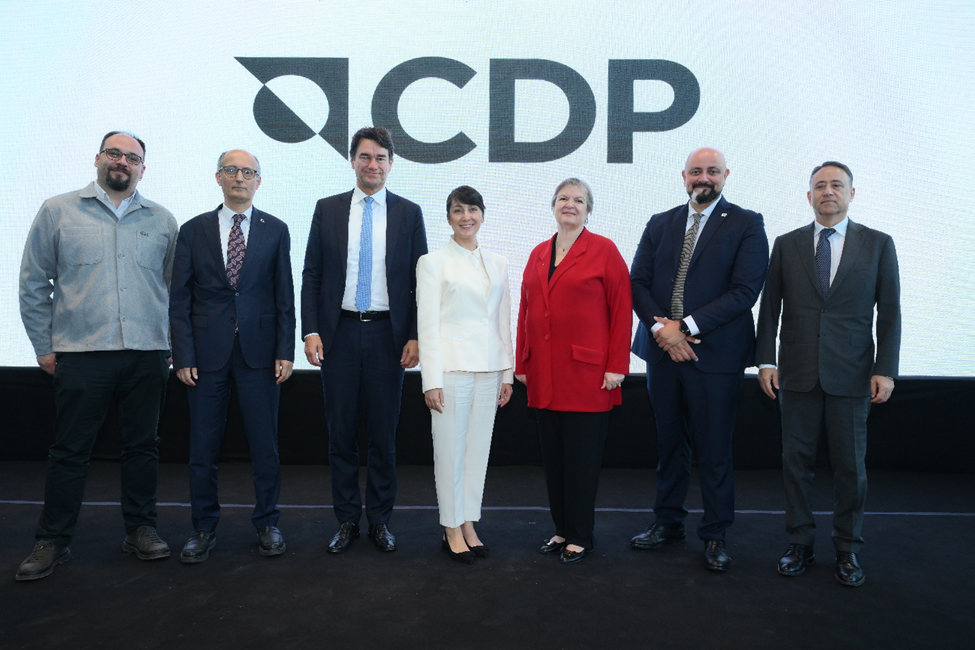
CDP’s Türkiye 2025 results were announced on Friday, May 15, 2026, during the CDP Türkiye 16th Climate Change & Nature Conference, Results Presentation, and Awards Ceremony. The event unveiled the findings of the “CDP Türkiye 2025 Climate and Nature Report” as well as the list of CDP Global and CDP Türkiye Leaders, based on CDP’s Global Scoring Methodology. This year’s CDP Türkiye Conference was held under the theme “Towards COP31: Turning Reporting Momentum into Global Competitiveness,”
In 2025, CDP maintained the stability of its reporting framework by introducing only limited changes to both the corporate questionnaire and the SME questionnaire compared to the previous year. While the scoring methodology remained largely unchanged, CDP implemented improvements aimed at enhancing clarity in the questionnaires and ensuring greater consistency in scoring. Furthermore, CDP continued to collaborate with leading global standards and frameworks to reduce companies’ reporting burden and support the transition to mandatory disclosure. One of the most significant steps was integrating IFRS S2, the ISSB’s climate-related disclosure standard, into its questions. Türkiye’s TSRS (Sustainability Reporting Standards), published by the Public Oversight Authority (KGK), are based on these ISSB standards.
During the conference, Mirhan Köroğlu Göğüş, CDP Türkiye Country Manager, presented the key findings of the CDP 2025 Türkiye Report. The conference also featured a panel discussion titled “Triple A Leaders Panel" ,moderated by Ozan Duygulu, Director of Sabancı University’s Corporate Governance Forum. Panelists included Mevhibe Canan Özsoy, Board Member of Garanti BBVA; Türker Tunalı, CFO of Akbank; and Kutay Kartallıoğlu, CEO of CarrefourSA.
CDP 2025 Awards Ceremony
Five of the 27 companies worldwide that achieved a place on the Triple A List by receiving an A score in all three programs—Climate Change, Water Security, and Forests—were from Türkiye. Overall, a total of 45 companies from Türkiye demonstrated leadership by achieving an A score in at least one program. In addition, 16 companies from Türkiye were included in the Double A List by receiving an A score in both the Climate Change and Water Security programs, while one company achieved an A score in both the Water Security and Forests programs. Furthermore, 16 companies from Türkiye received an A score in the Climate Change Program, seven companies in the Water Security Program, and two municipalities in the Cities Program. During the event, awards were presented to CDP Global A List leaders by Dr. Fatih Kemal Ebiçlioğlu, Vice Chairman of the TÜSİAD Board of Directors, and Murat Yünlü, Vice President of the Public Oversight, Accounting and Auditing Standards Authority (KGK).
You can click here to access the CDP Türkiye 2025 Climate Change and Nature Report.
Click here to access the presentation sharing the outputs of the CDP Türkiye 2025 Climate Change and Nature Report.
Click here for the Turkish summary of the CDP Türkiye 2025 Climate Change and Nature Report.
Click here for the CDP Türkiye 16th Climate and Nature Conference press release.
Click here to watch CDP Türkiye 16th Climate & Nature Conference and Award Ceremony on YouTube.
Click here to access the list of our leaders to date.
To visit the CDP Global website, go to: www.cdp.net
CDP Türkiye Main Sponsor

CDP Türkiye Report Sponsor
