
 ...
...
As extreme heat affects communities around the world, the need for effective climate solutions has never been more urgent. As the climate crisis intensifies, ecosystems continue to be damaged and degraded, leaving communities increasingly vulnerable.
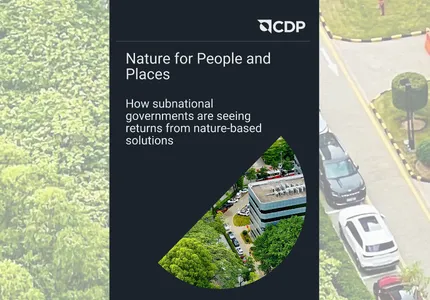
CDP's latest report, Nature for People and Places, shows that cities, states and regions are increasingly recognizing that protecting nature and tackling climate change go hand in hand. Drawing on data disclosed by cities, states and regions across 80 countries and every continent, representing 1.32 billion people, the report explores how subnational governments are integrating nature into climate action.
The findings reveal growing momentum behind nature-based solutions. Fifty-five percent of cities, states and regions are already implementing at least one nature-related solution, such as ecological restoration or afforestation, while 70% of subnational governments with climate adaptation goals prioritize nature-based solutions.
The report also highlights extreme heat as one of the most common climate hazards reported by cities in 2025 and demonstrates how nature-based solutions are already helping communities respond. Examples include planting street trees in Auckland, capturing and retaining water in Montréal, and investing in resilient infrastructure through solutions such as green roofs and living walls.
When governments and the private sector invest in nature, positive returns can be seen across climate adaptation, human health and local economies. In cities, states and regions, nature is not just an amenity, but essential infrastructure for health, resilience and economic strength. The question is no longer whether nature belongs in climate action planning, but how quickly governments can embrace it. Discover more in the Nature for People and Places report here.