
 ...
...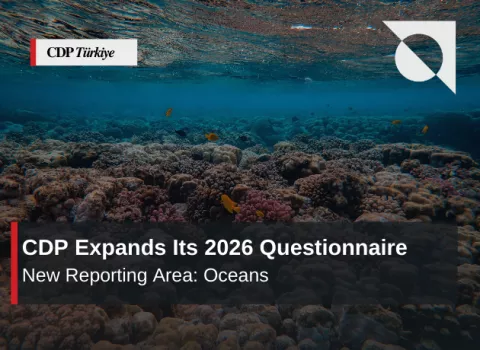
Starting this year, CDP will expand its questionnaire to include ocean-related data. In this first year of ocean-related reporting, companies will provide data on how they identify their dependencies on the oceans, their impact on the oceans, and the risks and opportunities related to the oceans.
This step aims to enable organizations to better understand their relationship with ocean ecosystems. CDP describes this new ocean-focused reporting area as a significant milestone in protecting one of the planet's most critical natural systems, while also aiming to support more informed decision-making processes in sectors that have a direct or indirect impact on the ocean.
CDP and the United Nations High Seas Treaty: Harmonization in Global Ocean Governance
The expansion of the CDP questionnaire to include oceans coincides with the High Seas Treaty (BBNJ), which entered into force on January 17, 2026, strengthening global ocean governance.The agreement establishes the first international legal framework regulating activities affecting biodiversity in seas outside national jurisdiction, aiming to increase transparency and accountability regarding the management of the high seas, which cover approximately half of the Earth's surface.
Within this framework, it is expected that reporting on environmental impact assessments, governance structures, and compliance processes will increase for companies and financial institutions operating in or indirectly affecting the high seas. Sectors such as maritime transport, fisheries, energy infrastructure, and mining are expected to adapt to the new global rules.
CDP will support the implementation of this new international framework by requesting standardized data on oceans, thus contributing to the translation of global ocean conservation goals into concrete actions.
To learn more about how CDP's data supports the High Seas Treaty, please click here.